bluehost

Tuesday, December 23, 2008

FOOD FOR THOUGHT


Life’s but a walking shadow, a poor player

That struts and frets his hour upon the stage

And then is heard no more. It is a tale

Told by an idiot, full of sound and fury,

Signifying nothing.

Macbeth, Act V, Scene V


Success is public affair. Failure is private Funeral.


Inexperience people imitate. Experience steal.


Education is a progressive discovery of our own ignorance! – Dryden


“I have no convictions, because I have no ambitions. However I have some convictions, in a nobler sense, which cannot be understood by the men of my time.”


In this part of the story I am the one who
dies, the only one, and I will die of love because I love you,
because I love you, Love, in fire and in blood.


I disagree with you, but I will fight for your right to say it,” 


" Everything has its own beauty but not every one sees it "- CONFUCIUS.

" Let the world change You , then you can change the World. "
- Ernesto Che Guevara .


 “A woman is worse than wine. She intoxicates the holder and the beholder”


By education most have been misled.
- Dryden.


Fare thee well

Both shall live, But every morrow

Wake us from a widowed bed.

Even though unforgiving, never

Against thee shall my heart rebel


Friday, December 19, 2008

why are Muslims so powerless?

An Islamic columnist on Jews
By: Dr Farrukh Saleem.
The writer is an Islamabad-based freelance columnist

Why are Jews so powerful? 

There are only 14 million Jews in the world; seven million in the
Americas , five million in Asia, two million in Europe and 100,000 in
Africa . For every single Jew in the world there are 100 Muslims.
Yet, Jews are more than a hundred times more powerful than all the
Muslims put together. Ever wondered why?

Jesus of Nazareth was Jewish. Albert Einstein, the most influential
scientist of all time and TIME magazine's 'Person of the Century', was
a Jew. Sigmund Freud -- id, ego, superego -- the father of
psychoanalysis was a Jew. So were Karl Marx, Paul Samuelson and Milton
Friedman.

Here are a few other Jews whose intellectual output has enriched the
whole humanity: 

Benjamin Rubin gave humanity the vaccinating needle.
Jonas Salk developed the first polio vaccine.
Albert Sabin developed the improved live polio vaccine.
Gertrude Elion gave us a leukemia fighting drug.
Baruch Blumberg developed the vaccination for Hepatitis B.
Paul Ehrlich discovered a treatment for syphilis (a sexually
transmitted disease).
Elie Metchnikoff won a Nobel Prize in infectious diseases.
Bernard Katz won a Nobel Prize in neuromuscular transmission.
Andrew Schally won a Nobel in endocrinology (disorders of the
endocrine system; diabetes, hyperthyroidism) .
Aaron Beck founded Cognitive Therapy (psychotherapy to treat mental
disorders, depression and phobias).
Gregory Pincus developed the first oral contraceptive pill.
George Wald won a Nobel for furthering our understanding of the human eye.
Stanley Cohen won a Nobel in embryology (study of embryos and their
development) .
Willem Kolff came up with the kidney dialysis machine.

Over the past 105 years, 14 million Jews have won 15-dozen Nobel
Prizes while only three Nobel Prizes have been won by 1.4 billion
Muslims (other than Peace Prizes).

Why are Jews so powerful? 

Stanley Mezor invented the first micro-processing chip. Leo Szilard
developed the first nuclear chain reactor; Peter Schultz, optical
fibre cable; Charles Adler, traffic lights; Benno Strauss, Stainless
steel; Isador Kisee, sound movies; Emile Berliner, telephone
microphone; Charles Ginsburg, videotape recorder.
Famous financiers in the business world who belong to Jewish faith
include Ralph Lauren (Polo),
Levis Strauss (Levi's Jeans), Howard Schultz (Starbuck's) , Sergey
Brin (Google), Michael Dell (Dell Computers), Larry Ellison (Oracle),
Donna Karan (DKNY), Irv Robbins (Baskins & Robbins) and Bill
Rosenberg (Dunkin Donuts).

Richard Levin, President of Yale University, is a Jew. So are Henry
Kissinger (American secretary of state), Alan Greenspan (Fed chairman
under Reagan, Bush, Clinton and Bush), Joseph Lieberman, Madeleine
Albright (American secretary of state), Casper Weinberger (American
secretary of defense), Maxim Litvinov ( USSR foreign Minister), David
Marshal ( Singapore 's first chief minister), Issac Isaacs
(governor-general of Australia ), Benjamin Disraeli (British statesman
and author), Yevgeny Primakov (Russian PM), Barry Goldwater, Jorge
Sampaio (president of Portugal ), John Deutsch (CIA director), Herb
Gray (Canadian deputy PM), Pierre Mendes (French PM), Michael Howard
(British home secretary), Bruno Kreisky (chancellor of Austria ) and
Robert Rubin (American secretary of treasury).

In the media, famous Jews include Wolf Blitzer (CNN), Barbara Walters
(ABC News), Eugene Meyer ( Washington Post), Henry Grunwald
(editor-in-chief Time), Katherine Graham (publisher of The Washington
Post), Joseph Lelyyeld (Executive editor, The New York Times), and Max
Frankel (New York Times).

Can you name the most beneficent philanthropist in the history of the
world? The name is George Soros, a Jew, who has so far donated a
colossal $4 billion most of which has gone as aid to scientists and
universities around the world. Second to George Soros is Walter
Annenberg, another Jew, who has built a hundred libraries by donating
an estimated $2 billion.
At the Olympics, Mark Spitz set a record of sorts by wining seven gold
medals. Lenny Krayzelburg is a three-time Olympic gold medalist.
Spitz, Krayzelburg and Boris Becker are all Jewish.

Did you know that Harrison Ford, George Burns, Tony Curtis, Charles
Bronson, Sandra Bullock, Billy Crystal, Woody Allen, Paul Newman,
Peter Sellers, Dustin Hoffman, Michael Douglas, Ben Kingsley, Kirk
Douglas, Goldie Hawn, Cary Grant, William Shatner, Jerry Lewis and
Peter Falk are all Jewish?

As a matter of fact, Hollywood itself was founded by a Jew. Among
directors and producers, Steven Spielberg, Mel Brooks, Oliver Stone,
Aaron Spelling ( Beverly Hills 90210), Neil Simon (The Odd Couple),
Andrew Vaina (Rambo 1/2/3), Michael Man (Starsky and Hutch), Milos
Forman (One flew over the Cuckoo's Nest), Douglas Fairbanks (The thief
of Baghdad ) and Ivan Reitman (Ghostbusters) are all Jewish.

To be certain, Washington is the capital that matters and in
Washington the lobby that matters is The American Israel Public
Affairs Committee, or AIPAC. Washington knows that if PM Ehud Olmert
were to discover that the earth is flat, AIPAC will make the 109th
Congress pass a resolution congratulating Olmert on his discovery.

William James Sidis, with an IQ of 250-300, is the brightest human who
ever existed. Guess what faith did he belong to?

So, why are Jews so powerful?
Answer: Education.

Why are Muslims so powerless?

There are an estimated 1,476,233,470 Muslims on the face of the
planet: one billion in Asia, 400 million in Africa , 44 million in
Europe and six million in the Americas . Every fifth human being is a
Muslim; for every single Hindu there are two Muslims, for every
Buddhist there are two Muslims and for every Jew there are one hundred
Muslims. Ever wondered why Muslims are so powerless?

Here is why: There are 57 member-countries of the Organisation of
Islamic Conference (OIC), and all of them put together have around 500
universities; one university for every three million Muslims. The
United States has 5,758 universities and India has 8,407. In 2004,
Shanghai Jiao Tong University
compiled an 'Academic Ranking of World Universities' , and
intriguingly, not one university from Muslim-majority states was in
the top-500.

As per data collected by the UNDP, literacy in the Christian world
stands at nearly 90 per cent and 15 Christian-majority states have a
literacy rate of 100 per cent. A Muslim-majority state, as a sharp
contrast, has an average literacy rate of around 40 per cent and there
is no Muslim-majority state with a literacy rate of 100 per cent. Some
98 per cent of the 'literates' in the Christian world had completed
primary school, while less than 50 per cent of the 'literates' in the
Muslim world did the same. Around 40 per cent of the 'literates' in
the Christian world attended university while no more than two per
cent of the 'literates' in the Muslim world did the same.

Muslim-majority countries have 230 scientists per one million Muslims.
The US has 4,000 scientists per million and Japan has 5,000 per
million. In the entire Arab world, the total number of full-time
researchers is 35,000 and there are only 50 technicians per one
million Arabs (in the Christian world there are up to 1,000
technicians per one million). Furthermore, the Muslim world spends 0.2
per cent of its GDP on research and development, while the Christian
world spends around five per cent of its GDP.
Conclusion: The Muslim world lacks the capacity to produce knowledge.

Daily newspapers per 1,000 people and number of book titles per
million are two indicators of whether knowledge is being diffused in a
society. In Pakistan , there are 23 daily newspapers per 1,000
Pakistanis while the same ratio in Singapore is 360. In the UK , the
number of book titles per million stands at 2,000 while the same in
Egypt is 20.
Conclusion: The Muslim world is failing to diffuse knowledge.
Exports of high technology products as a percentage of total exports
are an important indicator of knowledge application. Pakistan 's
export of high technology products as a percentage of total exports
stands at one per cent. The same for Saudi Arabia is 0.3 per cent;
Kuwait , Morocco , and Algeria are all at 0.3 per cent while Singapore
is at 58 per cent.
Conclusion: The Muslim world is failing to apply knowledge.

Why are Muslims powerless? Because we aren't producing knowledge,
Because we aren't diffusing knowledge., Because we aren't applying
knowledge.

And, the future belongs to knowledge-based societies.

Interestingly, the combined annual GDP of 57 OIC-countries is under $2
trillion. America , just by herself, produces goods and services worth
$12 trillion; China $8 trillion, Japan $3.8 trillion and Germany $2.4
trillion (purchasing power parity basis).
Oil rich Saudi Arabia , UAE, Kuwait and Qatar collectively produce
goods and services (mostly oil) worth $500 billion; Spain alone
produces goods and services worth over $1 trillion, Catholic Poland
$489 billion and Buddhist Thailand $545 billion. (Muslim GDP as a
percentage of world GDP is fast declining).

So, why are Muslims so powerless?
Answer: Lack of education.


Thursday, December 18, 2008

என் தம்பியை பிடிக்க முடியாது-பிரபாகரனின் சகோதரி


டோரன்டோ: எனது சகோதரர் பிரபாகரனுக்கு எந்த ஆபத்தும் இல்லை. எடுத்த காரியத்தை முடிக்காமல் அவர் ஓய மாட்டார் என்று விடுதலைப் புலிகள் இயக்கத் தலைவர் பிரபாகரனின் மூத்த சகோதரி வினோதினி ராஜேந்திரன் தெரிவித்துள்ளார்.பிரபாகரனின் மூத்த சகோதரி வினோதினி ராஜேந்திரன். இவர் கனடாவின் டோரன்டோ நகரில் வசித்து வருகிறார்.

பிரபாகரனின் இளமைகால படங்கள் வினோதினியின் வீட்டின் வரவேற்பு அறையை அலங்கரிக்கின்றன. வினோதினியின் அறையில் விடுதலைப்புலிகள் இயக்கத்தின் கொடி தொங்க விடப்பட்டுள்ளது.பிரபாகரனின் சகோதரியாக இருந்தபோதிலும் கனடாவில் நடக்கும் தமிழ் நிகழ்ச்சிகள் எதிலும் வினோதினி பங்கேற்பதில்லை. அதேபோல அரசியலிலும் அவர் ஆர்வம் காட்டுவதில்லை. தொலைக்காட்சிகள் மூலமாகவும், இணையதளங்கள் மூலமாகவும் இலங்கை நிலவரங்களை அறிந்து கொள்வதில் மட்டும் ஆர்வம் காட்டுபவர் வினோதினி.

பிரபாகரன் குறித்தும், தங்களது கடந்த கால வாழ்க்கை குறித்தும் கனடா நாட்டு பத்திரிக்கையான நேஷனல் போஸ்ட்டுக்கு வினோதினி பேட்டி அளித்துள்ளார். அதில் அவர் கூறியிருப்பதாவது ...யாழ்குடா பகுதியின் கடலோரத்தில் உள்ள வல்வெட்டி துறைதான் எங்கள் சொந்த ஊர். நாங்கள் நடுத்தர குடும்பத்தை சேர்ந்தவர்கள். எங்கள் தந்தை அரசு ஊழியர். நேர்மையை கடைபிடிப்பவர். அமைதியாகத்தான் பேசுவார். கடவுள் பக்தி அதிகம். உள்ளூர் கோவிலில் அறக்கட்டளை உறுப்பினராக இருந்தார்.

அரசு ஊழியராக இருந்தபோதிலும், எங்களது தந்தை லஞ்சம் வாங்க மாட்டார். மது அருந்த மாட்டார், சிகரெட் பிடிக்க மாட்டார். மிகவும் கட்டுப்பாடானவர், ஒழுக்கம் நிரம்பியவர். அவர் மாவட்ட நில அதிகாரியாக பணியாற்றினார்.வல்வெட்டித்துறையில் இருந்த எங்களது வீடு எளிமையானது. சிறிய வராண்டாவும், அழகிய வாழை மரமும் வீட்டின் முன்பு உண்டு. வீட்டைச் சுற்றிலும் வேலை அமைத்திருந்தோம்.

நான் 2 வயதாக இருக்கும் போதுதான் பிரபாகரன் 1954ம் ஆண்டு நவம்பர் 26ம் தேதி யாழ்ப்பாணம் மருத்துவமனையில் பிறந்தார். வீட்டில் மற்றவர்களை விட அவருக்குத்தான் செல்லம் அதிகம். எல்லோரையும் போலத்தான் அவரும் சாதாரண பையனாக வளர்ந்தார். அவரும் நானும் சின்ன வயதில் நிறைய சண்டை போடுவோம்.என் அம்மாவுக்கு புத்தகம் படிப்பதில் நிறைய ஆர்வம் உண்டு. அந்த பழக்கம் பிரபாகரனையும் தொற்றிக்கொண்டது. எப்போதும் படித்துக்கொண்டே இருப்பார். நூலகங்களில் இருந்து புத்தகங்களை வாங்கி வருவார். சரித்திர புத்தகங்கள் மீது அவருக்கு ஆர்வம் அதிகம். குறிப்பாக இந்திய சுதந்திர போராட்ட வீரர்களை பற்றிய புத்தகங்கள் என்றால் அவருக்கு மிகவும் பிடிக்கும். அதன் மூலமாகத்தான் புரட்சி இயக்கங்கள் மீது ஆர்வம் ஏற்பட்டு இருக்கலாம் என்று நினைக்கிறேன்.

எனது திருமணம் வல்வெட்டித்துறையில் நடந்தது. அப்போதே அவர் அரசுக்கு எதிராக மறைமுகமான காரியங்களில் ஈடுபட்டு வந்ததாக எங்கள் காதுகளுக்கு செய்தி வந்தது. அதன் பிறகு புதிய தமிழ் புலிகள் என்ற பெயரில் இயக்கத்தை உருவாக்கினார். அந்த இயக்கம் இலங்கை ராணுவத்துக்கு எதிரான செயல்களில் ஈடுபட்டதாக கூறப்பட்டது.

1972ம் ஆண்டில் ஒரு நாள் அவரை தேடி எங்கள் வீட்டுக்கு போலீஸ் வந்தது. உடனே பின்புற வாசல் வழியாக தப்பிச்சென்று விட்டார். அதன் பிறகு வீட்டுக்கு வருவதை நிறுத்திக் கொண்டார். யாழ்ப்பாணத்தில் பிரபாகரன் நடத்திய தாக்குதலை தொடர்ந்து கொழும்பில் கலவரம் வெடித்தது. அப்போது நானும் என் கணவரும் கொழும்பில் வசித்து வந்தோம். என் கணவர் துறைமுகத்தில் பணியாற்றி வந்தார். பிரபாகரன் எங்கள் குடும்பத்தை சேர்ந்தவர் என்ற விவரம் தெரிய வந்ததால் என் கணவருக்கு வேலை பறிபோனது.

சில நாட்கள் அகதி முகாமில் தங்கியிருந்த நாங்கள் மீண்டும் யாழ்ப்பாணம் திரும்பினோம். அங்கும் அரசின் தொல்லைகள் அதிகமானதால் சென்னை வந்தோம். அப்போது பிரபாகரனும் சென்னையில்தான் தங்கியிருந்தார். சென்னையில் நாங்கள் ஒரு உறவினரின் திருமணத்துக்கு சென்று இருந்த போது பிரபாகரனும் வந்தார்.நீண்ட நாட்களுக்கு பிறகு அப்போதுதான் அவரை நாங்கள் சந்தித்தோம்.அதன் பிறகு அவர் இலங்கைக்கு போகும் முன்பு எங்களை சந்தித்து, தான் ஊருக்கு போகப்போவதாக கூறிவிட்டு சென்றார்.

1997ம் ஆண்டு நானும் என் கணவரும் கனடாவுக்கு வந்து
விட்டோம். 2003ம் ஆண்டு நாங்கள் மீண்டும் இலங்கை சென்றோம். அப்போது என் பெற்றோரை சென்னையில் இருந்து கிளிநொச்சிக்கு அழைத்துச்சென்று தங்க வைத்தோம். அந்த நேரத்தில் எங்கள் வீட்டுக்கு சென்று இருந்தேன். நான் ஓடியாடி விளையாடிய வீடு குண்டு வீச்சில் உருக்குலைந்து போய் இருந்ததைப்பார்த்து துடித்து போனேன்.

என் பெற்றோரிடம் இருந்து அவ்வப்போது கடிதம் வரும். ஆனால் பிரபாகரனை பார்த்து எத்தனையோ ஆண்டுகள் ஆகிவிட்டது. அவருடன் எந்த தொடர்பும் இல்லை என்று கூறியுள்ளார் வினோதினி.வினோதினியின் வீட்டின் வரவேற்பறையில் மகாபாரத யுத்த களத்தில் அர்ஜுனனுக்கு கிருஷ்ணர் கீதா உபதேசம் செய்யும் போட்டோ இடம் பெற்றுள்ளது. அதன் கீழ் சில வாசகங்கள்.

கிருஷ்ணரை பார்த்து அர்ஜுனன் கேட்கிறான். "அவர்கள் என் உறவினர்கள் அல்லவா அவர்களை எதிர்த்து நான் எப்படி போரிடுவது?''அதற்கு கிருஷ்ணர் கூறுகிறார். "அது உன்னுடைய கடமை நான் கடவுள். நான் சொல்வதை செய்.''வினோதினி அந்த படத்தை காட்டி கிருஷ்ணர் சொன்னதை கேட்டதும் அர்ஜுனன் போரில் இறங்கினான். பிரபாகரனுக்கு மகாபாரதம் மிகவும் பிடிக்கும்.பிரபாகரன் எந்த காரியத்தை கையில் எடுத்தாலும் அதை முடிக்காமல் விட மாட்டார். ஈழ விடுதலைப் போரை தொடங்கியவர் அவர். அதனால் அதில் இருந்து அவர் பின்வாங்க மாட்டார். எங்கள் தந்தையை போன்று
மன உறுதி படைத்தவர் என்றார்.வினோதினியின் கணவர் தற்போது டோரன்டோவில் உள்ள பர்னிச்சர் கடையில் பகுதி நேர வேலை பார்த்து வருகிறார்.

http://cenimafun.blogspot.com/2008/12/blog-post_1901.html

Monday, December 15, 2008


A Profoundly Mystical  Amalgamation - Consecration of Mahima at the IIIS, USA


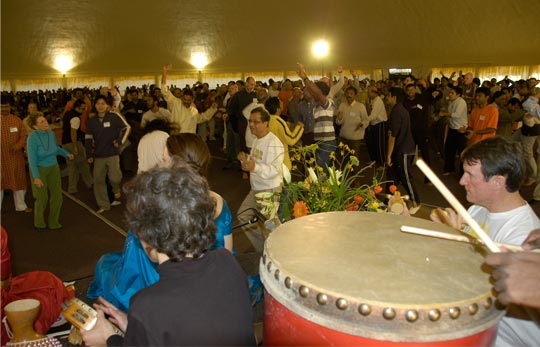
The momentum that has been building for almost three years now – since the Tennessee mountain acreage was purchased for the development of the Isha Institute of Inner Sciences – swelled to a crescendo on 7 November 2008 when Mahima, the 39,000 square foot meditation hall that will be the center point of the IIIS in the US, was consecrated. The three-day event, ‘Consecrating the Seat of Grace,' attracted more than 600 participants, as well as an additional 120 guests who attended the concluding ceremony on 8 November.

Crisp fall air welcomed guests on the evening of 6 November. Drivers were directed to an almost fairyland-like parking lot, where cars slid carefully in between trees to park atop mounds of soft, damp pine needles. The path to the central complex passes a newly made lake, a small, still pond that reflected the moonlight. Approaching Mahima, one could distinctly smell the soft, sweet, sacred scent of vibhuti in the air – and then suddenly, the trees parted and the dome was there, rising up in the clearing, striking in its magnitude.

Mahima, a gigantic project that took almost two months and more than two million dollars to complete, is overwhelming in its openness, the ceiling rising to 70 feet and the diameter of the floor space stretching to 225 feet across. Like Spanda Hall at the Isha Yoga Center, there are no interior columns or supports, and the space engulfs the viewer, prompting dumbstruck stares and gaping mouths from those entering for the first time. For those who have visited the Dhyanalinga, the dome-shaped ceiling also elicits a sympathetic resonance that is certainly not coincidental.

Buzzing with activity, the dome was a hive of busy volunteers racing to complete the many tasks required before the program's official start early the next morning. A light dinner was served in the dining tent after which many left for nearby hotels, since the lodge capacity at the IIIS was overflowing. Work continued round the clock, and many volunteers did not sleep at all – or lay in their beds for a quick hour of rest, too worked up to sleep.

Upon entering the hall just before 5:30 am for the first official guru pooja, two beautifulmandalas gleamed in the darkness, candlelight flickering over the intricate designs of stones, beans, flowers, rice, and leaves. After practices were completed, participants had the chance to change into dressy clothes for the day's special – and as of yet completely unknown – activities. On filing back into the hall at 8:20 am, women were aligned in radial rows on one side of the hall, men on the other, stretching out from the center dais like rays of the sun.

Handouts in Sadhguru's handwriting entitled ‘Sensitizing the Space' were circulated, which contained the lines of a mantra to which participants devoted the morning and part of the afternoon. One meditator, who flew from the UK to be present for the occasion, said of the chanting, "I felt like every word I was uttering was contributing to something big, was actually changing the atmosphere around me. It was so hard for me to finally get up and leave the space; I had to almost tear myself away." Several meditators spoke of the difficulty of chanting the mantra and the resistance they felt – one related that it took most of the day before he was able to dive in and "tears started pouring out of my eyes." Long segments of chanting alternated with segments of sitting in silence, during which time Sadhguru's voice chanted ‘Linga Bhairavi' over the audio system.

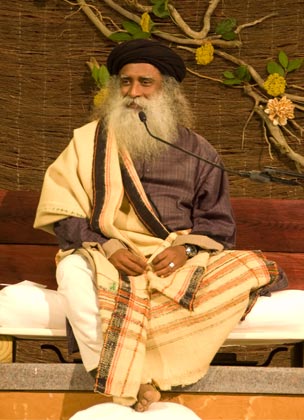
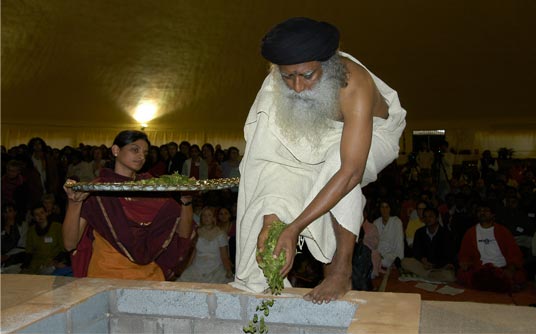
Participants returned from their second break to find Sadhguru on the dais, already engaged in activity. Many immediately noted his black turban, unstitched cloth wrapped around him, and mystical yet perfectly assured presence. Sadhguru soon began directing a cadre of male meditators, dressed in traditional white Indian panchakachams , who were bringing sand and various other ingredients to the dais.

The process continued as Sadhguru combined different ingredients inside an enormous stainless steel box that was lifted and set inside the dais. "I hadn't a clue what was going on but was just mesmerized. I knew it was something absolutely out of this world," shared an awestruck participant. Another said, "Seeing Sadhguru, the mystic, so physically and energetically involved in the alchemy of the consecration was unforgettable." At a certain point, Sadhguru handed a bowl containing a paste to one of the teachers and indicated that participants were to smudge the contents between their eyebrows. An awed participant said, "It was so masterful, the way he conducted himself and the proceedings with such assurance. It was a real honor that he invited us into that space. It felt like he was unfolding a different side of himself."

After some time, Sadhguru began chanting a mantra unlike anything those attending had ever heard before. One participant revealed that "when he started chanting that one mantra, it tapped something ancient within me. Something from a completely different time. An undercurrent within me connected with something else that wasn't me anymore. It was a very powerful experience and feeling – really difficult to define – but something very real." Another concurred: "That mantra was really strong… it opened me up and completely connected me into something. Don't know what it was, can't describe it, but it was really powerful." Participants eventually joined in chanting the mantra, and then those who were confident of the phrasing took over the chanting completely. One who kept going said, "There was a point where an overwhelming presence just came over me. I felt completely connected to it because what I was chanting was a part of it. There were a few moments where my whole self was forgotten, I was only the mantra, and it was saying me. Even in my experience it was inexplicable, just a mind-blowing thing."

After some time, Sadhguru directed participants to sit with their spines in line with the dais, facing backwards. "When we faced away, it felt like huge energy, so huge I couldn't contain it in my body," a meditator shared.

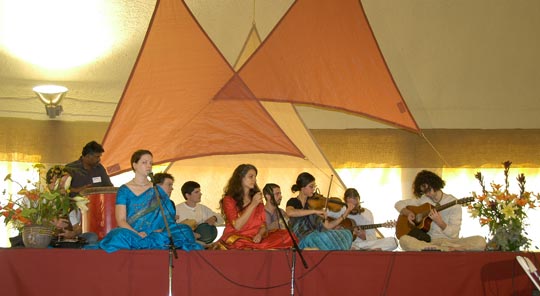
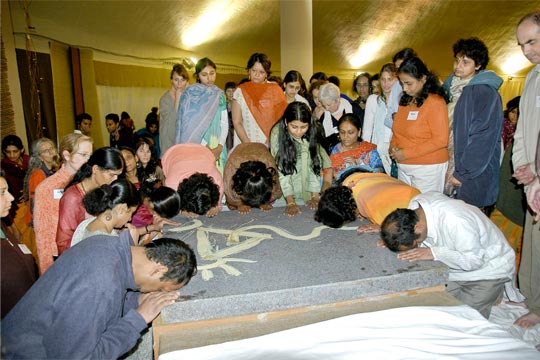
At the end of the process, a large granite stone was set in place over the area in the center of the dais and Sadhguru invited participants to come and touch both the dais and the stone. A line soon formed of reverent participants, eager to come in contact with the newly energized Seat of Grace. After a break, musicians played songs specially created for the occasion, and then all gathered for Sathsang.

Sadhguru spoke about the new discoveries he'd made during the most recent Kailash and Manasarovar yatra, making the half-joking disclaimer that it was the weirdest thing he has spoken of until now and that his reputation was on the line. He then acknowledged the political change that had transpired in the US only a few days prior with the presidential election and said, to huge applause, that he thought it was a good week for the US. He clarified that he is certainly not aligned to any political party, nor was he making a political statement, but that, although we may not realize it, America has such a bad reputation worldwide and has begun to redeem itself with this choice.

He then moved on to talking about the consecration of Mahima and the nature of its energy – a soft, sweet energy, quite different from that of Spanda Hall. Here, he said, the energy will creep up your spine in a way that will be complimentary to theShambhavi Maha Mudra offered in Inner Engineering programs, and to the western culture. He addressed the need for us to have a spiritual plan – that we should be planning out at what point we will become full-time spiritual, depending on whether we have children and other factors. And that regardless of whether we live in an ashram or not, we should inhabit our home as if it were an ashram – that it should be a non-exclusive place which we live inside, but do not live for.


The next morning after practices, an additional influx of guests were welcomed, beginning with a short concert from the Mahima musicians that ended with everyone on their feet, dancing and clapping and shouting for more. All gathered for a question and answer session with Sadhguru, at which time he explained a bit more about the nature of consecration. "Constantly all around us, one substance is being made into another. This transition and this transformation is happening all the time. If you make mud into food, that's called agriculture. If you make food into a human being, this is called digestion. If you make a human being into mud again, we call this cremation. If you transform the physical into the non-physical, that's called consecration. Why the need to transform the physical into non-physical? Because that's your longing. When you say I want to walk the spiritual path, what you're saying is, I want to touch something which is non-physical."

Sadhguru then talked about neo-natal wards and their ability to nurture unformed life. He made the parallel to Mahima, saying that it's like a womb, or an incubator, for spiritual development. After the program was over, many participants remarked on the aptness of the description. "I experienced that it was a sweet, soft, energy while meditating," one meditator shared. One of the residents of IIIS, walking past Mahima the day following consecration, had "an experience of profound silence and stillness that was more than absence, beyond silence, deeper than blackness. At the same time, it was distinctly feminine. And yet so profound and powerful. I noticed that I, too, was being a little more soft and feminine. There was a new lightness in me; I felt I was more discreet, less crass in my movements, more graceful, and more subtle."

Everyone present felt that the consecration was the beginning of a new phase, a concrete step towards something enormous. And yet Sadhguru cautioned that it was up to us to determine what we would do with the space and how we would use it – and with the question left unresolved when the event was over, meditators were left to ponder just what each individual would contribute, seek, work for, and let go in order to make Mahima more than a hall, more than a place for spiritual entertainment, more even than a bi-yearly place for Sadhguru to come and hold Sathsangs and basic programs – but a place that will finally hold court to, as Sadhguru has offered, mystical dimensions this part of the world has never seen.


In the Midst of a Legend - Sadhguru's Visit to Dharmasthala


Dharmasthala literally means "the abode of Dharma." Sri Kshetra Dharmasthala is a small temple town and a much sought after pilgrimage center, 65 km east of Mangalore, in Karnataka state. Sadhguru recently criss-crossed the country to be in Dharmasthala, where he inaugurated a unique multi-religious conference at the invitation of Dr. Veerandra Heggade, the 21st Dharmadhikari of Dharmasthala.

Having been ordained into Heggadeship at an early age of 20, Dr. Heggade he has been at the helm of affairs for the last 40 years. Not being content with its past glories, he continuously applies himself to adapt to the changing situations and needs of society and strives to keep dharma as a leading beacon for common people. He is widely recognized as a trendsetter in the administration of religious centers and as having made Dharmasthala a model center for social and spiritual wellbeing of all people without discriminations of any sort.

When Dr. Heggade requested Sadhguru to visit Dharmasthala and inaugurate the 76th Annual Multi-Religious Meet on 26th November, Sadhguru initially was reluctant to accept, as it meant non-stop travel for him just after his arrival from the US. However, when Dr. Heggade mentioned that he would be delighted to have Sadhguru there on his birthday the previous day, and also that like Sadhguru, he was an auto-enthusiast himself, and that he wanted to show Sadhguru his antique car collection of close to 100 cars – all restored and kept in working condition – Sadhguru did not seem to need further encouragement.

An interest in automobiles was not the only thing Dr. Heggade had in common with Sadhguru. A few weeks before the event, when I was with Dr. Heggade, working out the details of the event with Sadhguru, I could see a familiar penchant for details and a genuine concern about all things and people that one is used to with Sadhguru. As our discussion time spilled over the scheduled time slot, he invited me to join his walk in their Naturopathy Center. A top management group of their Health Services awaited him there and Dr. Heggade shifted seamlessly between receiving updates, giving directions, exchanging a few words with patients, showing me the place and explaining the philosophy behind their actions – all at the same time.

When Sadhguru arrived at Dharmasthala, the first thing he commented on was how the buildings were tastefully done. "Otherwise, in all the religious institutions that I have been, the buildings are always horrible," he said. Dr. Heggade told me that their architecture is something he looks into himself. Like Sadhguru, he is a graduate in English literature and not a formally trained architect or an engineer himself. So, I was surprised to see him not only effortlessly read full-scale building plans that people presented for his approval, but also comment with ease on the proportions needed and the changes to be made.

His love for architecture did not limit itself to their own buildings, but extended into a massive heritage conservation and restoration effort wherein they have restored hundreds of ancient temples that had fallen into ruins. He told Sadhguru, "People used to invite me to inaugurations of renovated temples and it was really painful to see beautiful, ancient structures being defaced by crude concrete work." On the rural development side, Dharmasthala is credited with running one of the best social engineering projects in the country today, integrating social, cultural and religious considerations. Though Dr. Heggade is well-informed and aware of the other contemporary attempts, it is not surprising that their approach is entirely home-grown.


In spite of their fundamental approach being diametrically opposed, there seemed to be great interest and appreciation for each other. It was also fun to see the two literature graduates engage in some multi-lingual pun. When Sadhguru greeted Dr. Heggade on his birthday, he also handed him a birthday present – a large, artistically done Shiva Panel (by Isha Craft, of course). As it took two people to carry it in, Sadhguru said in Kannada, "Nimage idondu chikka koduge" or "This is a small present for you", Dr. Heggade was quick to reply: "Tamilalli chikka andare china. Nimma koduge nijavagalu Chinna" (The Kannada word for "small" is chikka, while in Tamil, it is chinna. But chinna in Kannada means "gold." So he said "Your present is really a golden one!")


hat evening, Sadhguru witnessed the decorations of the famous Laksha Deepotsava ("Million Lamps" festival) and the time-old temple rituals. The next morning, Sadhguru was taken to the Manjunatha Temple, where he was offered the seat of honor, next to the formal seat of the Heggade. Later, Sadhguru was taken around the antique car collection as promised, where Dr. Heggade showed him various models of cars from horse-driven and human-driven to 6, 12 and 18 cylinder ones. Among the antique Fords, Rolls Royces and Cadillacs, he also showed cars used by Maharajas, Mahatma Gandhi and Sir C V Raman. Dharmasthala is also famous for the free meals they serve to devotees at the Temple. Their state-of-art kitchen and dining hall with a seating capacity of 5,000 was established more than 20 years ago when cooking and serving meals in that scale was unheard of. That noon, Sadhguru requested to have lunch in the Annapoorna Dining Hall along with the Temple devotees.

In the evening, Sadhguru addressed a public gathering where he shared the dais with Prof. Mumtaz Ali Khan, Minister of Minority Welfare of Karnataka and Mr. Jagadish Shettar, Speaker of Karnataka Legislative Assembly. Though Sadhguru began with the Kannada song "Ello Hudikide Illada Devara" that held everybody spellbound and switched to speaking in Kannada in between (when the audience cheered), much of the talk was still in English. Sadhguru paid rich compliments to the multi-religiousness at Dharmasthala and said it is a fitting tribute to Shiva, who comes from no lineage and sees no distinction in devotees.

Dr. Heggade is assisted in his work it by his three brothers who are equally passionate about it. Their combined effort has been successful in creating a role model in charity work. Thus for us, what was meant to be only a speaking engagement, turned out to be a very inspiring and enriching visit. Sadhguru deeply commended the social work there and particularly appreciated how it blended tradition with modernity and reinforced the local culture rather than destroy it, as most developmental work usually tend to do.

A visit to Dharmasthala is a treat not just for the religious-minded or for those who wish to see some good old-fashioned charity in action, but for all who seek a harmonious approach to human well-being…

by
An Isha Volunteer

Dealing with Terrorism

Dealing with Terrorism

Dec 2008


It is a matter of deep concern and regret that in the recent past, terrorist attacks and serial bombings killing hundreds of innocent people and maiming thousands more have become a matter of routine in the country. This recent dastardly attack in Mumbai is neither sudden nor unexpected. It has been building up for the last few years, and unfortunately, we as a nation, have neither shown the vision nor the determination to handle it the way it should be.

The purpose of terrorism is not war but to cripple a society with fear. Their aim is to spread the panic among the people, divide the society, derail the economic growth of the country, create strife, violence and lawlessness at every level – in other words, reduce the country to a failed state. We are facing the brunt of terror strikes in India today because of an imbalanced political approach. While these terrorists have been able to strike at will, openly challenging the authorities to stop them if they can, the administration is yet to apprehend them, much less, bring the culprits to justice.

Of all the kinds of violence, particularly religion-motivated terrorism is the most dangerous kind. You can speak reason to a man who is fighting for anything else, but when a man believes he is fighting for his God, there is no reasoning with him. When people are fighting for money, property, or something else, it is possible to negotiate with them because they are life-oriented; but those who are fighting for God, or working for God or doing God’s work are only too eager to die and take all of us with them.

After more than a thousand years of external invasions, foreign occupation and extreme poverty this nation is now on the threshold of economic wellbeing. This opportunity has not come free, but out of much pain, suffering and sacrifice by generations of people before us. It is therefore our duty to bring their efforts to fruition and make their dreams come true.

It is obvious that there are certain elements who do not want this nation empowered. It is high time we defeated the nefarious designs of these anti-national elements.

There are those who are not committed to the idea of nationhood and they cannot be dealt with softly. If we want to preserve and nurture the sovereignty of this nation, these elements who are willing to kill indiscriminately and also die in the process, these elements whose beliefs are not concurrent with the fundamentals of the nation-state, should be dealt with an iron hand and a steely long-term resolve.

If we want to exist here as a nation, we have to learn the fundamentals of how to maintain the sovereignty of the country. For short-term political purposes, we are abusing the liberal ethos of this nation and its culture. Our leadership and the people do not seem to understand this.

We are talking about dharma in the wrong context: if our kindness, compassion and tolerance become a danger to ourselves, after some time, society will not value these qualities anymore. It is very important that anybody who threatens the normal functioning of society and the nation must be put down. The long-term solutions are different, but this fighting for God has to be put down, absolutely – it doesn’t matter which section of society it comes from.

These terrorists are not always political pawns or tools in somebody else’s hands. Those forces who cater to such elements are always there, but when one says, “Let’s go fight and kill people for our God” – whether you directly participate in it or not, as long as you believe that your way is the only way, you are a part of it.

We are still unwilling to face that there are people among us who have such beliefs and intentions. Somewhere we think, forces from outside the border are pulling the strings. But help is coming from outside only because people here have these intentions.

Today, it has become fashionable for people to talk about the human rights of a terrorist, but there seem to be no rights for ordinary human beings who walk the street. It is a completely unfair way of looking at life. Someone who carries a gun or bomb, with the intentions of shooting and killing anybody on the street – innocent people, women and children – simply needs to be dealt with decisively.

There are larger, long-term solutions for these growing causes. We must nurture the integrity of the nation and a strong bonding among the people of different social, ethnic and religious backgrounds. We must bring a more equal distribution of education, economic opportunities, wealth and welfare on all levels. The socio-economic development has to reach everybody so that youth don’t go in the direction of terrorism.

All these aspects have to be taken care of over a period of time, but for immediate purposes, these terror activities must be put down strongly. This lawlessness has to be brought to an end.

In the larger picture, what we need for the country and the world is more inclusiveness in individuals and the institutions of society. And inclusiveness is not only the fundamental nature of spiritual processes, but the very basis and goal of life itself.

At this time of unprecedented tragedy in Mumbai, it is of utmost importance to stand together as a nation beyond all narrow divides of religion, caste, creed or political affiliations, and to support our security forces at all levels to perform their duties. I beseech all the various groups, political parties to fulfill the trust the nation has placed in them –that of protecting lives and properties of innocent people. Above all, I appeal to the administration to act in a decisive way and take this seemingly endless fight to a logical end.

My heartfelt condolences go to the families who lost their dear ones in this tragedy. These are the times when we need to display our spiritual strength and stability, and a determined focus toward a solution.

I am with you.

Sadhguru

Wednesday, December 3, 2008

சில‌ காத‌ல் க‌விதைகள்

என் இத‌ய‌ம்
முழுவ‌தும்
நிர‌ம்பி வ‌ழிகிற‌து
உன்னை ப‌ற்றிய‌
ஆசைக‌ள்

அத‌னை மொய்க்க‌
வ‌ருகின்ற‌ன
என் எண்ண‌ 
எறும்புக‌ள்

*************

சிற‌ப்பித‌ழ்

என் இத‌ய‌த்தின்
ப‌க்க‌ங்க‌ளில் எல்லாம்
உன் முக‌ங்க‌ளை 
அச்சிட்டு வெளியிட்ட‌து
காத‌ல்